Lessons from Richard Florida and Bruce Katz
Two renowned urbanists visited Erie to discuss the future of the American city

In some ways, it might feel like it was yesterday – the ghost of our past hanging close as a 3-in-the-afternoon shadow. In other ways, it might seem like a decade ago – a blurry mirage off somewhere miles in the distance. In reality, it's been little over three-and-a-half years since the onset of the COVID-19 pandemic, but perhaps it feels that way because the pandemic has distorted our perception of time and, no doubt, left an indelible impact on how we work, live, play, and connect.
In March 2020, did we yet know we were on the precipice of the unknown? Or was it by April? Or sooner? Maybe later? What's Zoom?
Was it when the mandatory shutdowns were ordered? When we learned which businesses were essential, and therefore which ones were not? Or was it the shelter-in-place directives? The 9/11-sized death tolls, daily? Am I six feet from you? Are you six feet from me?
Regardless of your specific when, you know the story, of course, and know that then came the mourning of loved ones lost, the hope the vaccines brought, the reopening of schools, businesses, and attractions, the return to travel, the declaring of the end of the pandemic, et cetera.
You know, then, too, the inseparable tales of public health and economic crises.
What businesses pivoted? What does pivoting mean? Who didn't make it? Who's new? Do you have your camera on or off during this Teams meeting? When can I go back to the office? Do I ever need to go back to the office? Should we move out of the city and get some land in the country? When will we be back – and what does back mean?
You also know, then, of course, the myriad headlines – some alarming, some taking gleeful delight – that major metro regions were experiencing mass exoduses. What then is the story of the American city today as we near the end of 2023 and welcome 2024 and approach the fourth anniversary of COVID-19 pandemic?
That story, it turns out, is one we've heard and told before: The rise and fall – and then rise again of the American city.
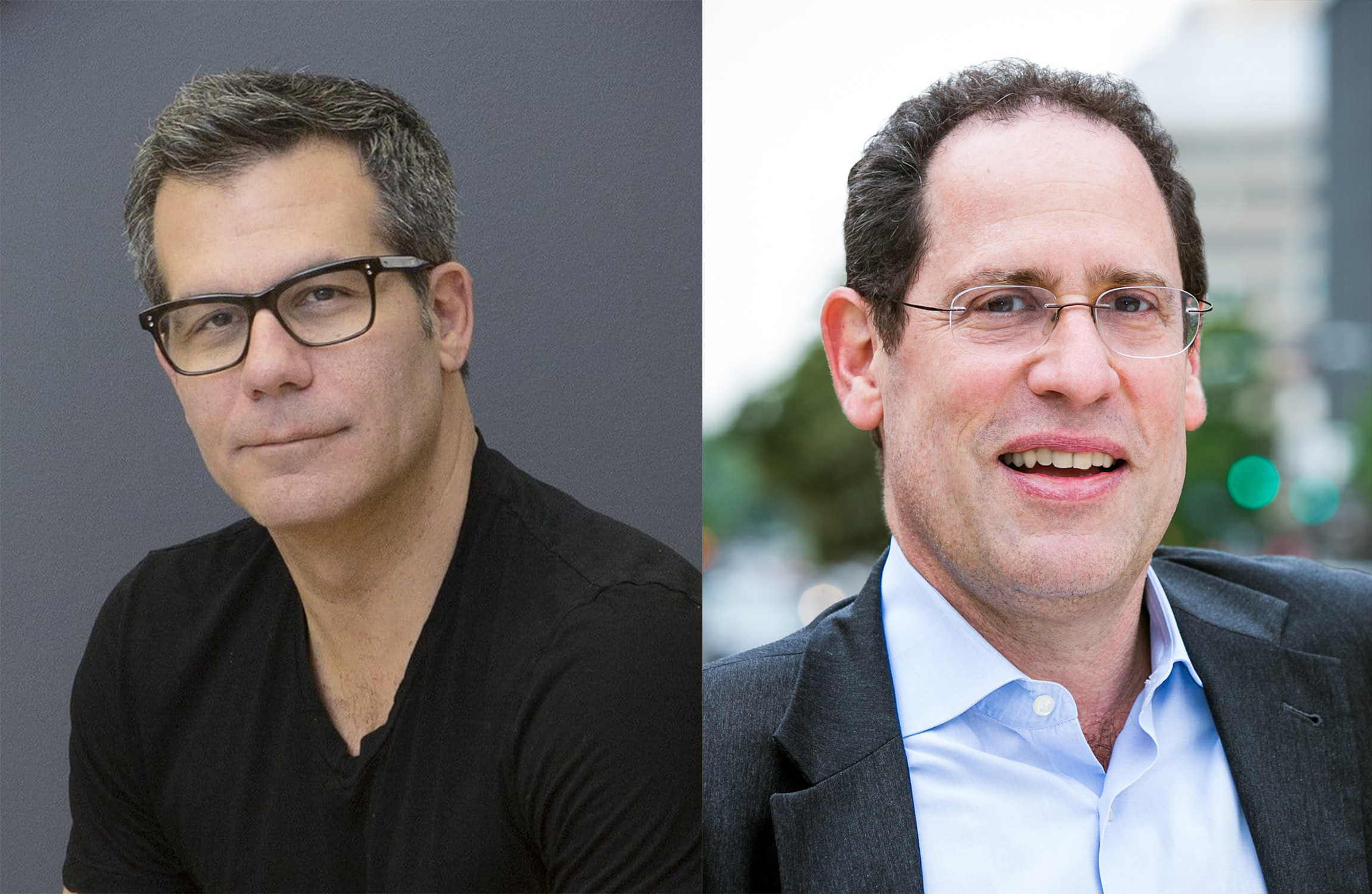 Richard Florida (left) and Bruce Katz (Photo credit: contributed)
Famed urbanists Richard Florida and Bruce Katz were recently in Erie, telling that story live on the campus of Gannon University as part of the Jefferson Educational Society's Global Summit. Part of that story includes Florida admitting he's come to change his view.
On stage in front of some 300-plus attendees, the author of the seminal Rise of the Creative Class, which has begot a series of additional critically acclaimed works, told the audience it's not that he no longer agrees with what he argued 20 years ago and has since – that post-industrial cities stand to experience revivals, renaissances, and virtually any other r-word signaling rebirths or rejuvenations thanks to an increased presence of knowledge-based workers, intellectuals, artists, and other, well, creative types. It was in Pittsburgh, where he was a professor at Carnegie Mellon University for nearly two decades, that he was arguing against massive public investments in stadiums and the like that he, in his own words, "believed that at the time (they) were not important to attract the creative class."
But a once-in-a-century pandemic with its complex and complicated implications has a unique way of recalibrating one's focus.
"I believe that on the global scale, and on the local scale, destinations and attractions are much more important than I originally believed," Florida told the audience. "And I think my argument against destinations and attractions was a bit of a mistake."
Florida cited a new study, which he's since reported on for CityLab, by Paul Levy and his team at Philadelphia's Center City District that examined the state of 26 American downtowns. All but one, it turns out, have more residents living there today than they did in early 2020. In fact, America's downtowns have recovered to 111 percent of pre-pandemic levels.
Why then are attractions more important today than the proverbial yesterday? Workers are returning to the office – some more quickly than others – but the in-office occupancy rate, on average, nationwide, is still just roughly half.
What's more, Florida cited the study that found that on an average day, residents account for 11 percent of activity in downtowns. Workers generate 27 percent, but the overwhelming majority – 62 percent – comes from visitors.
"That's telling you something – that downtowns are really the gathering places in our communities," Florida told the Global Summit audience. "Destinations, attractions, are really important to galvanize your community as a gathering place or as a center of connections."
The center of connections is the next chapter in the rise and fall and rise of the American city.
Katz asked Florida whether he thought the sudden rise of remote work was cyclical or structural. Florida believes it is the latter, and "is a phenomenon related to a larger trend, which is digitalization and the fact that we can work online, learn online, buy things online."
The biggest impact of the pandemic won't be on how we live and where we live, Florida continued. It will be on central business districts. "My view is that the traditional central business district is one of the last relics of the Industrial Age," he told the audience.
The first relics – factories – moved out of cities in the '70s and '80s, and were replaced with "the packing and stacking of people in office towers." Now, we're learning we needn't do, or rely on that to create vibrant, healthy downtowns.
"When I wrote Rise of the Creative Class, the subtitle was and How It is Changing the Way We Live, Work and Play. I would like to take that title back. It should be: How It is Changing the Way We Live, Work, Play, and Connect. What cities really are, are connection machines. It's no longer a central business district. It's a central connectivity district."
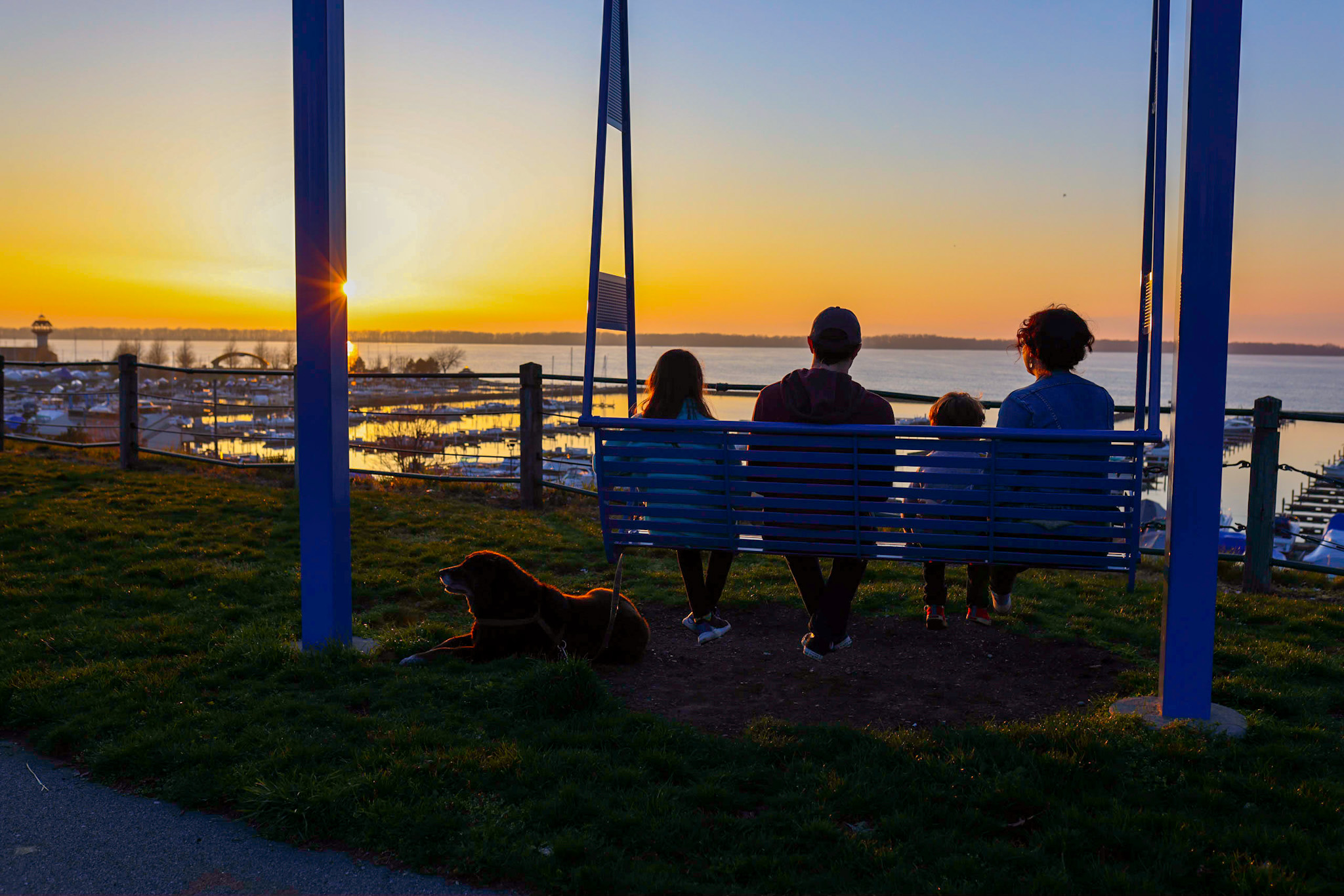 Erie's waterfront has always and will always be a central point of connection, and a draw to regional travelers, employees, and visitors in addition to our newest, commercial amenities. (Photo credit: Jessica Hunter)
Examples he cited from a walk around Erie's downtown near and through Perry Square just before his mid-day event: the Flagship City Food Hall and the nearly opened Ascend indoor rock-climbing gym.
Like co-working spaces, they're a space to bring people to, and connect them, in downtowns. "People that work from home don't work from home," Florida relayed. "They work from co-working spaces, libraries, restaurants, cafés, or a friend's house. We are social animals; we crave connection."
What might cities have that's even better? "A waterfront," Florida added.
Erie – with its food hall, its rock-climbing gym, Radius CoWork, Ember+Forge, its stunning waterfront, etc. – has all that, and more. None of which – aside from a waterfront – it had some 20 years before when Florida last visited Erie, let alone a decade ago.
In the hour-plus they spent discussing the future of the American city on stage together, Florida and Katz had, of course, many other observations:
The funding "firehose" brandished by seemingly carefree investors in the federal government, leaving cities to play the role of strategists. Fortune favors the bold – and favors even more the bold with a plan.
Of the 31 tech hubs announced, 40 percent are in America's heartland, Rust Belt, or anywhere not along either coastline where the technological economy has been largely concentrated until now.
The return to making big things. Like electric cars. And the batteries that will power them. And how America's re-shoring, and that that doesn't mean a stop to international trade but rather a re-evaluating of international relationships and partners.
How some cities, like St. Louis, are addressing equity by creating jobs in historically underinvested-in areas largely populated with minority communities.
How climate change is leading to climate migration, and how cities are addressing climate change at the local level.
The opportunities and the optimism. The challenge and the American spirit of determination. The cautions worthy of being offered, even when people might not take them seriously.
"My caution to every place I've gone in the past 10 years – I've said the same thing and been laughed out of the room – think now about how you keep your housing affordable," Florida told the Erie audience.
He talked about being in Nashville a decade or so ago, and folks laughed. Later, it was Bentonville, Arkansas, where they, too, laughed.
"You know what I did last year?" he asked the Erie audience. "I wrote the affordable housing strategy for Bentonville, Arkansas."
Continuing on while drawing the event to a conclusion, Florida reiterated the assets present and being leveraged in Erie's downtown toward continued growth: a strong employer (Erie Insurance), a downtown campus (Gannon University), local philanthropy empowering transformational projects (the Erie Community Foundation), and attractions (the Food Hall, the rock wall, etc.), and more.
"Think about how you maintain and keep your community, the kind of community in which your kids and other young people can afford to buy a house and live in in the future," the son of a Newark, New Jersey factory worker who dropped out of school in the seventh grade to make a living told the audience. "That would be my single most important recommendation: to make sure that your place remains affordable for future generations."
Ben Speggen, vice president of the JES, can be contacted at bSpeggen@ErieReader.com, and you can follow him on Twitter/X @BenSpeggen.